

Blog
Get Pay Right on ADP Workforce Now® Next Gen™
Bringing trusted compensation intelligence and seamless planning to even more ADP users.
Written by Salary.com Staff
December 26, 2025

The talent market is rapidly expanding with more and more organizations hiring people from around the globe. In fact, a 2025 Remote.com survey found that 73% of HR leaders expect more than half of their new hires to be international by 2026, and 74% say compliance is one of their biggest challenges when hiring globally.
Now that global talents are becoming the norm, global compensation management is now essential. Global compensation management is not simply paying teams across the globe. It’s about building a global pay strategy that supports fair pay, aligns with business goals, and helps attract and keep top talent.
In this guide, we’ll walk through why global compensation management matters, what goes into an effective global compensation framework, and how to manage and improve it as your company grows.
Global compensation management is the process of planning, overseeing, and adjusting pay, incentives, and benefits for employees working in different countries. It covers everything from base salary and variable compensation to benefits, equity programs, and allowances that may vary by location. The goal is to keep compensation fair, competitive, and compliant with local labor and salary laws while supporting the company’s overall business goals.
HR, compensation specialists, and finance teams usually handles global compensation management. They work together to align job levels across markets, maintain pay equity, and adjust pay based on cost of living, currency shifts, and local expectations. This type of management matters for global teams because employees expect fair pay no matter where they live. It also helps companies stay competitive in multiple markets, avoid non-compliance risks, and build trust with international teams.
To support this work, tools like Salary.com’s Compensation Management Software give companies access to global market data in one system. It helps HR teams benchmark pay ranges across regions, compare compensation packages, and make informed pay decisions for employees in many countries.
Global compensation management ensures the global teams receive fair and competitive pay. But why does it matter to HR teams? Global compensation management is more than just deciding salaries across borders. It directly affects talent retention, compliance, cost control, and overall organizational performance.
Here’s why it matters:
Attract and retain talent worldwide: Competitive, fair, and market-aligned global pay helps attract skilled professionals and keeps them motivated across regions. According to WTW’s 2024 survey, 48% of employees cite pay as a main reason they join or stay with a company, making it the top factor in retention and attraction.
Ensure fairness and compliance: Standardized pay practices consider local laws, cost of living, and market rates, reducing gaps, favoritism, and legal risks.
Control costs efficiently: A coordinated global pay plan optimizes budgets, forecasts payroll, and guides strategic talent investments.
Drive business goals: Aligning global pay with performance and company objectives incentivizes the right behaviors, from innovation to market expansion.
Boost engagement with data-driven insights: Transparent, consistent pay improves morale, loyalty, and retention, supported by real-time analysis of trends and gaps.
Managing global pay is no easy task. HR teams juggle market shifts, currency changes, fairness, compliance, and talent retention. A strong global compensation framework isn’t just about pay; it’s a strategic tool that keeps the company competitive and builds employee trust.
A strong global compensation management strategy ensures the company pays employees fairly across multiple countries while staying competitive and compliant. Here’s a simple 5-step approach:
Define your global pay philosophy
Set the foundation by deciding how your company positions pay across global teams—for example, targeting market median, leading in competitive markets, or balancing internal equity. Tie your philosophy to business objectives, talent retention, and employee expectations.
Gather Global Market Data
Collect compensation data on base salary, variable compensation, equity programs, and benefits for each market. Tools like compensation management software make it easier to benchmark pay across different countries, monitor pay equity gaps and maintain internal equity.
Set Pay and Benefits Structures by Region
Use your data to establish pay ranges, total rewards packages, and employee benefits that reflect local employment laws, cost of living, and cultural expectations. Include frameworks for currency fluctuations, retirement contributions, and health insurance to maintain fair and competitive pay.
Align Compensation with Roles, Performance, and Goals
Map job roles to pay bands and tie variable compensation or equity programs to performance and company business goals. This ensures consistent employee pay, motivates top talent, and supports global expansion.
Implement, Monitor, and Adjust
Define approval workflows, maintain audit trails, and use real-time compensation management tools to track pay, indirect compensation, and benefits administration. Regularly review metrics to ensure ensuring pay equity, adjusting for market competitiveness and evolving employee expectations.
Global compensation management can get tricky fast, especially when every country has its own rules, cost and market shifts. A clear and consistent process can make global compensation management easier, fair and compliant. Here’s how:
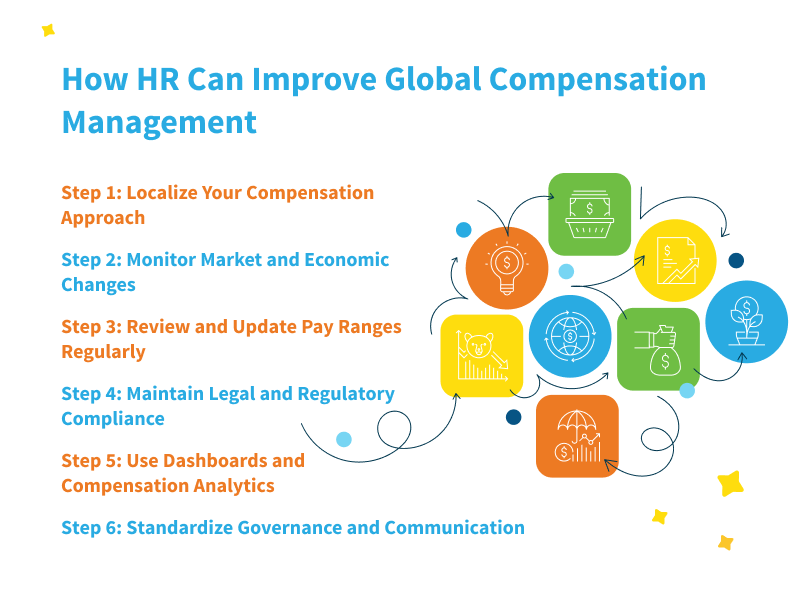
Do not replicate the policies on the main headquarters. Align pay structures with each country’s cost of living, cultural norms, and job market standards. Build country-specific benchmarks to make sure your pay levels remain competitive in different regions.
Track labor market shifts, inflation trends, and currency changes to avoid outdated pay rates. Adjust salary bands proactively so compensation stays fair and realistic in every location.
Evaluate pay ranges at least once a year to check for gaps, compression, or outdated numbers. Refresh ranges based on global benchmarks, internal data, and performance outcomes.
Stay aligned with local labor laws, tax rules, wage requirements, and reporting standards. Keep documentation updated to reduce compliance risk across all regions.
Use dashboards to track spending, pay gaps, and market position across countries. Spot trends early and support leadership with data-driven insights.
Communication is the key. Create clear guidelines for approvals, adjustments, and compensation policies. Communicate updates to HR teams and managers so the process stays consistent globally.
Managing a global workforce is tough, and handling global compensation can add even more pressure. That’s why using compensation management software helps a lot. It gives HR teams a simple way to manage global pay data, keep salary structures consistent across countries, make audits and compliance checks easier, and shift from reactive fixes to more proactive planning.
Here are some questions that are related to global compensation management:
Global compensation aims to attract and retain top talent across borders, while ensuring fairness and alignment with business strategy. It also helps companies stay competitive in different labor markets, manage costs, and maintain equity across regions.
One common approach is the “going‑rate” model, where pay is benchmarked against local (host country) market rates. Another approach is the “balance‑sheet” model, often used for expatriate assignments. It adjusts pay and allowances, so employees maintain similar living standards regardless of location.
Key components include a base salary (adjusted for role and local cost‑of‑living), variable pay such as incentives and bonuses, and benefits (healthcare, retirement, insurance, etc.). Many packages also include allowances (housing, cost‑of‑living, mobility), tax equalization for expatriates, and sometimes equity or stock‑based rewards.

The latest research, expert advice, and compensation best practices all in one place.
Blog
Bringing trusted compensation intelligence and seamless planning to even more ADP users.

Blog
Learn how to train managers for effective pay conversations and build trust.

Blog
Total rewards package flexibility lets employees choose what matters - pay, perks, and benefits tailored to their needs.