

Blog
Get Pay Right on ADP Workforce Now® Next Gen™
Bringing trusted compensation intelligence and seamless planning to even more ADP users.
Written by Salary.com Staff
November 21, 2025

Salary surveys provide objective data to ensure fair pay and attract top talent. Whether for a small business or large corporation, conducting surveys can improve compensation strategies, reduce turnover, and align pay with industry trends. According to the 2024 survey, employers anticipate a 3.9% rise in base pay budgets for 2025, highlighting the need for fresh salary survey data to guide decisions.
This guide will show you how to conduct a salary survey, from understanding its purpose to choosing the right format for collecting accurate, actionable data.
A salary survey is a systematic process where employers or compensation professionals gather and analyze salary data from survey participants across various companies to benchmark employee salaries against market value.
This compensation survey data provides a complete picture of pay practices, including:
base salary,
cash compensation,
even perks like housing allowances in certain sectors.
Tapping into multiple data sources, such as other employers in your industry, you can uncover salary ranges for specific job titles and roles, making it easier to determine the right compensation for job descriptions.
Think of it as your roadmap to competitive pay; without it, you're guessing in a fast-changing job market. For instance, survey results often reveal how entry-level employees or key executives are faring, influencing everything from compensation structures to executive compensation packages.
By integrating multiple data sources into a dynamic, continuously updated database, Salary.com's Benchmark Pay Data provides comprehensive, real-time market pricing for any job, enabling precise and systematic salary benchmarking.
Conducting a salary survey offers clear advantages for any organization serious about its compensation strategy.
Attract and retain top talent: Using salary survey data helps craft appealing compensation packages that draw in skilled professionals and cut down on high turnover. To support efficient pricing, Salary.com's Streamlined Pricing offers a three-step process with advanced filters, market data, and custom reports, streamlining competitive pay decisions to attract and retain talent.
Inform strategic decision-making: Access to detailed reports on industry trends allows HR teams to adjust pay rates proactively, ensuring your company remains competitive without overpaying.
Ensure fair compensation: Comparing against objective data from multiple data sources allows organizations to spot gaps in pay equity, promoting diverse and inclusive compensation structures for all job roles.
Benchmark against peers: Salary benchmarking reveals how your cash compensation stacks up against similar employers, helping refine benefits and perks for maximum impact.
Support Budget Planning: Insights into salary ranges and maximum salaries guide forecasting, as seen in ISM's 2025 Salary Survey Summary, where median pay rose 8% year-over-year to $119,600.
Salary surveys vary in format to meet different needs, from general overviews to detailed, role-specific insights. Choosing the right type helps compensation teams get relevant market data, whether for nonprofits or executive roles. Here's a quick look at the main types.
Market salary surveys: These pull from wide data sources like published reports from survey vendors, ideal for quick overviews of pay practices across industries.
Custom surveys: Tailor-made for specific job titles or regions, involving direct data submission from your network of survey participants to gather precise, valuable data.
Industry-specific surveys: Focused on sectors like tech or healthcare, these highlight trends such as compensation for key executives or entry-level employees.
Geographic surveys: Emphasize location-based factors, including housing allowances, to reflect regional market value variations.
Total compensation surveys: Go beyond base salary to include benefits, bonuses, and other elements of compensation packages for a holistic view.
Conducting a salary survey doesn’t have to be overwhelming; it’s a structured process that leads to better pay decisions.
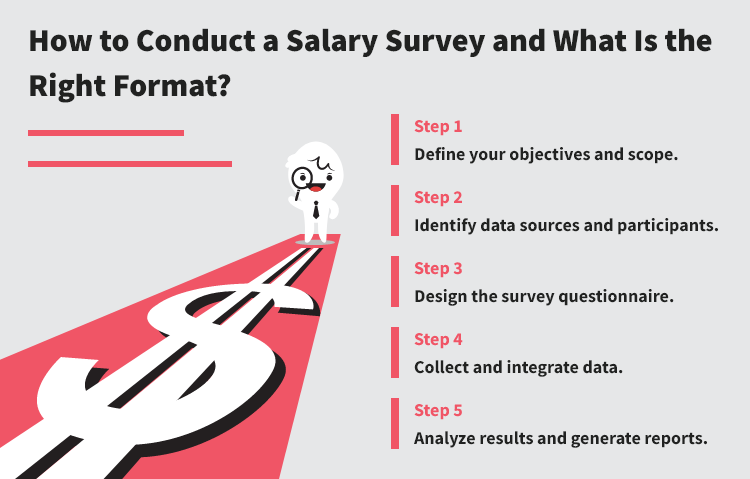
Start by defining your objectives, such as benchmarking salary ranges or analyzing industry pay trends. This ensures your survey focuses on the right roles, employee groups, and key data points like base salary and total compensation.
Engage a mix of data sources, other employers, industry peers, and public datasets, to ensure diverse survey participation. Target companies of similar size and sector to gather sufficient, reliable data for meaningful comparisons.
Design clear questions on cash compensation, benefits, and participant details, keeping the process simple to boost response rates. Include job titles, experience levels, and locations to gather accurate, strategic data.
Launch the survey and monitor responses using secure tools to maintain confidentiality. Once collected, clean and integrate data from various sources to ensure accuracy and identify pay patterns.
For flexible collection, Salary.com's Mobile Access allows job pricing and report access anytime, anywhere, supporting secure, on-the-go monitoring.
Dive into the collected data to produce detailed reports on salary data, market value, and trends, perhaps comparing to previous years for context. Share findings with stakeholders to inform decision-making, highlighting insights like rising pay rates or gaps in fair compensation.
Here are some FAQs for better understanding:
Figuring out how much to pay someone starts with solid salary benchmarking using recent survey results and market data. Look at factors like job descriptions, industry standards, and local pay rates, then adjust for unique perks in your compensation packages.
Tools from compensation surveys can provide salary ranges, helping you land on a figure that's competitive yet sustainable; aim for the sweet spot where base salary meets total value to keep talent engaged.
A person's salary is shaped by a blend of individual skills, experience, and external market forces, all cross-referenced against compensation data from reliable sources. For example, job roles in high-demand industries often command higher pay due to talent shortages, while location influences adjustments like housing allowances.
Recent studies show that professionals in finance saw a 3.9% pay bump, driven by role complexity and economic shifts. Ultimately, it's about balancing these elements to reflect true market value and ensure long-term employee satisfaction.
In most places, yes, you're generally allowed to share your salary details with others, as pay transparency laws in many U.S. states now protect this right to promote equity. However, some employers might have policies discouraging it, though these can't override legal protections, discussing pay openly can even empower collective bargaining for better compensation structures.

The latest research, expert advice, and compensation best practices all in one place.
Blog
Bringing trusted compensation intelligence and seamless planning to even more ADP users.

Blog
Learn how to train managers for effective pay conversations and build trust.

Blog
Total rewards package flexibility lets employees choose what matters - pay, perks, and benefits tailored to their needs.