

Blog
Get Pay Right on ADP Workforce Now® Next Gen™
Bringing trusted compensation intelligence and seamless planning to even more ADP users.
Written by Salary.com Staff
December 26, 2025

In today's competitive job market, a strong salary is often not enough to attract and retain top talent. Organizations are increasingly turning to comprehensive employee rewards that extend beyond base pay. A well-designed benefits package is a critical tool for attracting, retaining, and motivating employees. It demonstrates a company's investment in its workforce's well-being, contributing to higher job satisfaction and a positive work environment.
This guide will explain what an employee benefits package includes, its purpose, and provide a step-by-step process for creating a competitive benefits plan that aligns with both your organization's goals and your employees' needs.
An employee benefits package is a collection of non-wage compensation provided to employees in addition to their regular salaries or wages. These benefit packages for employees are designed to improve the economic security of employees and improve their quality of life.
A comprehensive benefits plan typically includes a mix of offerings such as:
health insurance,
retirement plans,
paid time off, and
various other perks.
Designing a benefits package can be complex, involving considerations of cost, employee needs, and market trends. Organizations often seek expert guidance to create a program that is both competitive and cost-effective.
Need help designing a comprehensive compensation and benefits program? Salary.com's consulting services can provide the expertise you need to build a competitive advantage.
A strong benefits package serves several strategic purposes for an organization. According to a recent World at Work study, 91% of employees say that having a "modern" benefits package makes them more likely to be satisfied with their employer. The primary goals of offering a comprehensive benefits package for employees include:
Attracting top talent: A competitive benefits package can be a key differentiator in the job market, helping organizations stand out to potential candidates.
Retaining employees: Valuable benefits increase employee loyalty and reduce employee retention and turnover, saving the company significant recruitment and training costs.
Supporting employee well-being: Benefits like health insurance, wellness programs, and mental health support help employees stay healthy and productive.
Improving job satisfaction and productivity: When employees feel valued and supported through their benefits, their overall job satisfaction and boost employee engagement, leading to higher productivity.
An employee benefits package can include a wide range of offers. They can be categorized into several key areas, providing a useful framework for understanding the different types of support employers can offer.
SHRM lists these common examples of benefits packages for employees:
This health insurance coverage often the cornerstone of any benefits package and is highly valued by employees.
Medical, dental, and vision insurance: These health insurance plans help cover the costs of healthcare, from routine check-ups to major medical expenses. Options often include HMOs, PPOs, and high-deductible health plans (HDHPs).
Health Savings Accounts (HSAs) and Flexible Spending Accounts (FSAs): These accounts allow employees to set aside pre-tax money for qualified medical expenses.
Wellness programs: These can include gym memberships, mental health benefits, and other initiatives aimed at promoting a healthy lifestyle.
Retirement savings plans help employees save for their financial future.
401(k) plans: These are popular defined contribution plans where employees can invest a portion of their pre-tax salary. Many employers offer matching contributions, which significantly boosts retirement savings.
Pensions (Defined benefit plans): These plans provide a guaranteed payout in retirement based on salary and years of service.
Paid time off gives employees a chance to rest and recharge, contributing to a healthier work-life balance.
Vacation days: Time off for leisure and personal travel.
Sick leave: Time off to recover from illness or care for a sick family member.
Parental leave: Leave for new parents following the birth or adoption of a child.
Holidays: Paid days off for national or company-recognized holidays.
These benefits provide financial protection for employees and their families in case of unforeseen events.
Life insurance: Provides a payment to beneficiaries in the event of an employee's death.
Short-term and long-term disability insurance: Replaces a portion of an employee's income if they are unable to work due to illness or injury.
Many employers offer a variety of other perks to improve their benefits package.
Flexible work arrangements: Options like remote work or flexible hours.
Professional development: Opportunities for training, certifications, and tuition reimbursement.
Commuter benefits: Pre-tax funds to cover public transportation or parking costs.
Student loan repayment assistance: Programs that help employees pay down their student debt.
Pet insurance: Coverage for veterinary expenses.
Creating a benefits package that is both attractive to employees and sustainable for the organization requires a strategic approach. Here are five actionable steps to guide you.
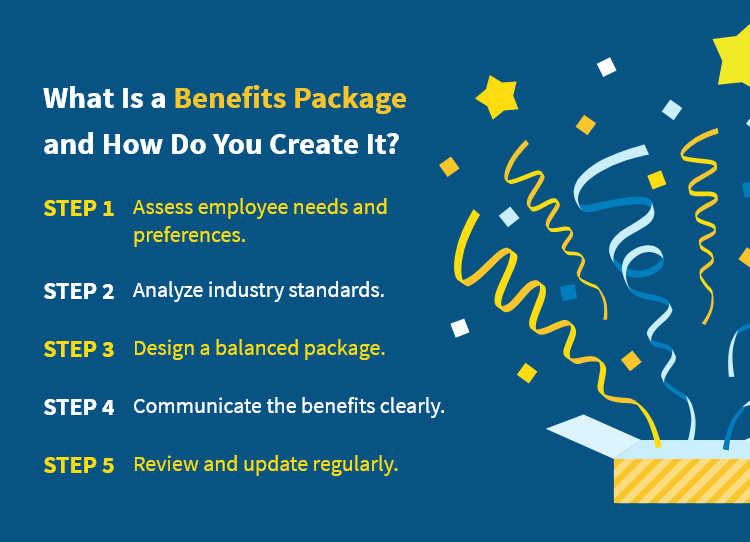
The first step is to understand what your employees value. Use surveys, focus groups, and one-on-one interviews to gather employee feedback. Analyze your workforce's demographics to identify the needs of different employee groups. Younger employees might prioritize flexible work and student loan repayment or tuition assistance, while older employees may be more focused on robust retirement plans and health insurance.
To remain competitive, you need to know what other companies in your industry are offering. Benchmarking your employee benefits package against competitors will help you identify gaps and opportunities in your own offerings. This analysis ensures your package is attractive enough to draw top talent.
Use Salary.com's HR analytics and benchmarking services to understand competitor offerings and ensure your benefits are competitive.
A successful benefits package for employees include a mix of core benefits and optional perks. Core benefits, like health insurance and retirement plans, are essential. Additional benefits, such as wellness programs or professional development, can be added to improve the package and cater to specific employee needs. The goal is to create a comprehensive plan that provides value across your diverse workforce.
Salary.com's consulting team can help you design a balanced package that aligns with your company's philosophy and budget.
Once you have designed your benefits package, it is crucial to communicate it effectively to your employees. Ensure they understand what is offered, how to enroll, and how to use their benefits. Clear communication increases employee appreciation and utilization of the benefits, maximizing the return on your investment.
A benefits package should not be static. Regularly review your plan to ensure it continues to meet the needs of your employees and aligns with market trends. The business environment, workforce demographics, and regulations are always changing, so periodic evaluations are necessary to keep your benefits competitive and effective.
Here are some frequent queries on benefits package for employees:
Many comprehensive employee benefits packages do include life insurance and, at least in larger or well-resourced organizations, short-term and/or long-term disability insurance as standard offerings.
Commuter benefits are a popular perk, especially in urban areas. They allow employees to use pre-tax funds for expenses like public transit, parking, and ride-sharing services, which can result in significant savings.
Common perks include flexible work arrangements, professional development opportunities like tuition reimbursement, wellness programs, employee assistance programs (EAPs), pet insurance, and childcare assistance.
Yes, health and wellness benefits are increasingly common. Many employers offer gym membership subsidies, access to mental health apps or counseling services, and other wellness perks to support employees' overall well-being and promote a healthier work-life balance.

The latest research, expert advice, and compensation best practices all in one place.
Blog
Bringing trusted compensation intelligence and seamless planning to even more ADP users.

Blog
Learn how to train managers for effective pay conversations and build trust.

Blog
Total rewards package flexibility lets employees choose what matters - pay, perks, and benefits tailored to their needs.